

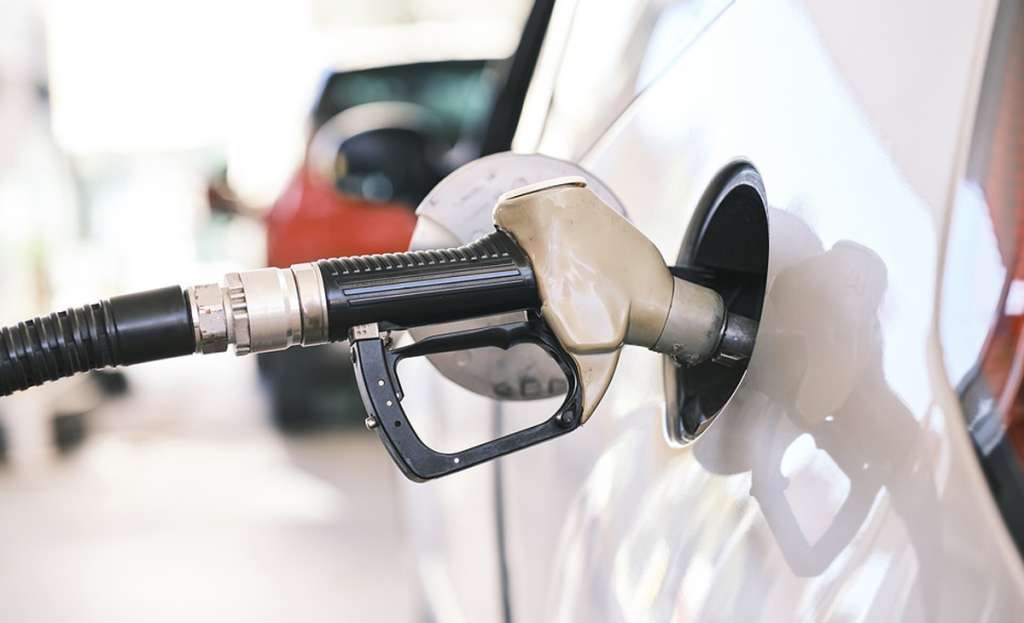
NEW YORK (AP) — U.S. gas prices fell to just below $4 a gallon on average Thursday, bringing some relief to drivers who have seen soaring costs amid Washington’s war with Iran
But filling up is still more expensive than it was before the conflict began.
According to motor club AAA, a gallon of regular gasoline is now averaging at $3.999. It’s the first time since March that prices have been that low. And the drop aligns with easing crude oil costs overall, with some optimism about an initial agreement between the U.S. and Iran to end their war.
Still, American drivers are collectively paying about $1 more per gallon than they were before the U.S. joined Israel to attack Iran in February — and prices are 25% higher than they were at this time last year. That’s caused many households to tighten their budgets in other areas, or rethink where they want to spend their money more broadly.
More expensive bills beyond gas
Gas isn’t the only thing that’s gotten more expensive over the course of the war. Groceries, airline tickets and even condoms and shoes cost more amid global supply chain disruptions.
Even if oil and other core necessities — like fertilizer — begin flowing from the Middle East again, experts warn that the sticker shock will likely outlast the fighting.
“Product prices across the United States are projected to keep climbing for the rest of 2026,” Pat Penfield, a professor of supply chain practice at Syracuse University, said Thursday.
Penfield pointed to depleted inventories and ongoing supply chain consequences spanning from the war — noting that farmers, for example, already had to pay higher costs for fertilizer and other supplies in the spring that will “ripple through to increased food prices by autumn.” And at the gas pump, he noted that limited refinery capacity in the U.S. “remains a significant bottleneck” towards bringing down prices.
What prices at the pump look like nationwide
Steep fuel costs have already pushed U.S. inflation to its highest level in three years. And many consumers are still filling their tanks for much more than $4 a gallon.
That price is a national average, with costs varying between states due to factors like proximity to supply and differing tax rates. In California on Thursday, prices averaged about $5.64 for a gallon of regular gas, per AAA, followed by $5.57 in Hawaii. Meanwhile, prices in Indiana and Texas sat at about $3.40 and $3.49 a gallon, respectively.
Recent relief for fuel prices arrived with cooling costs for crude oil — the main ingredient in gasoline.
Brent crude, the international standard, fell under $78 per barrel Thursday. And U.S. benchmark crude tumbled to just over $74 per barrel. That’s still a little higher than the roughly $70 price tag before the war, but far below the $100-plus price from just a few weeks ago.
Why oil costs are falling
Prices fell overnight after President Donald Trump signed an agreement with Iran. The tenuous agreement calls for Tehran to dilute its stockpile of highly enriched uranium and waives U.S.-backed sanctions on the country — immediately allowing Iran to sell its oil freely in a significant concession from Washington.
Major ship owners have also begun moving vessels through the key Strait of Hormuz since the memorandum of understanding was signed Wednesday, according to maritime data from Lloyd’s List Intelligence, although some reported that only more limited side routes were open. And U.S. Vice President JD Vance said Thursday that the Navy has lifted its own blockade to allow some transit to and from Iranian ports.
Still, it could take weeks or months for traffic to return to pre-war levels. Before the war, the strait carried a fifth of the world’s crude oil. And Gulf oil producers that throttled back production will need time to get the oil moving again.
Some ship captains may take their time to determine if the passage is safe. The agreement between the U.S. and Iran calls for a permanent end to hostilities and starts a 60-day negotiating clock to reach a final deal on the future of Iran’s nuclear program, though Trump left the door open to resume attacks.
Refineries also typically pay for crude oil a month or more in advance, so even after oil prices drop, they won’t immediately be processing cheaper products. Energy shocks have been even starker in places that rely more heavily on imports from the Middle East — notably countries across Asia and Africa.
(Copyright (c) 2026 The Associated Press. All Rights Reserved. This material may not be published, broadcast, rewritten, or redistributed.)